Twin Strikers · AWS Agentic AI & Cloud
25 June 2026 · MEXT (MESS Technology Center), Istanbul
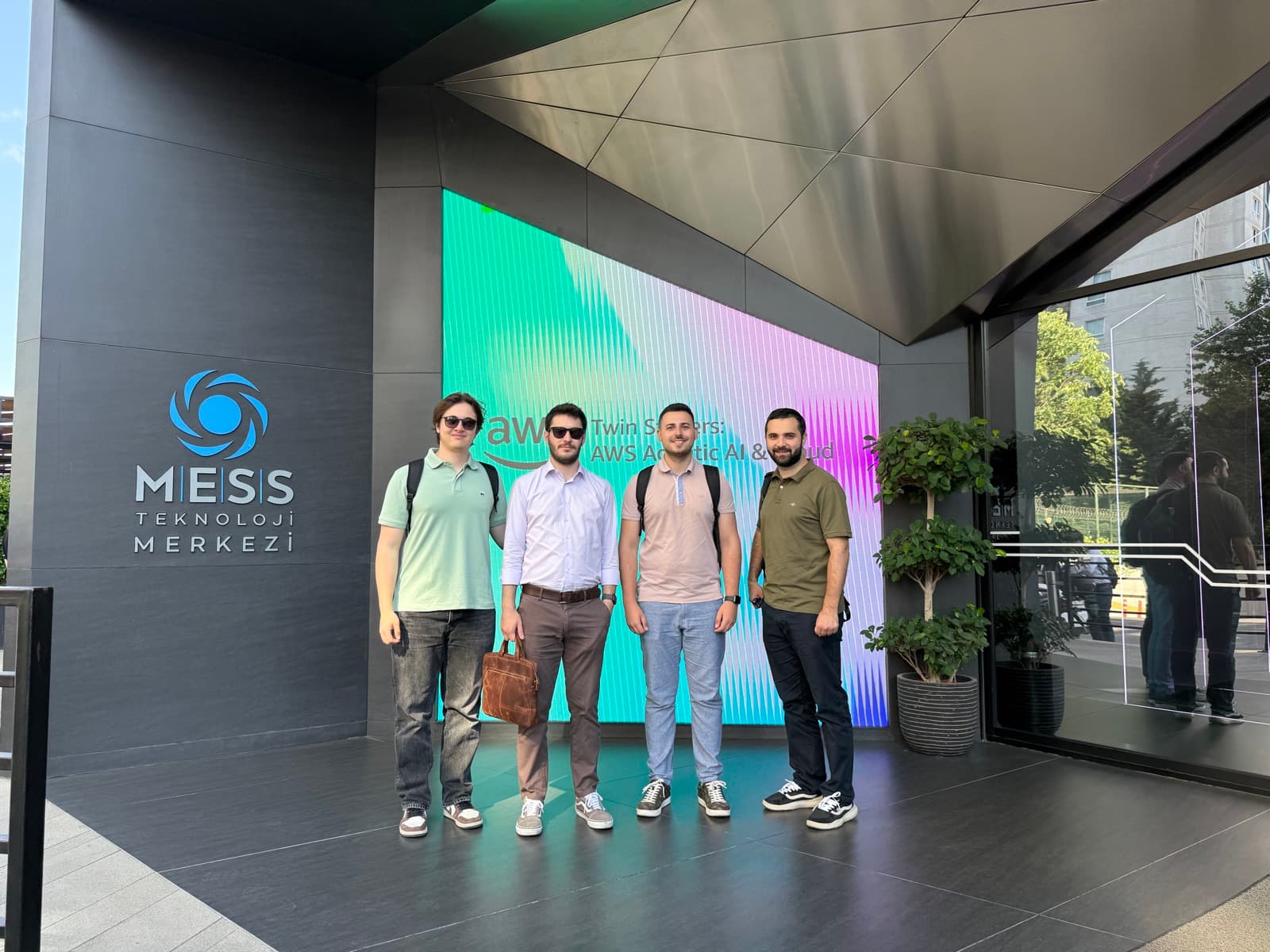
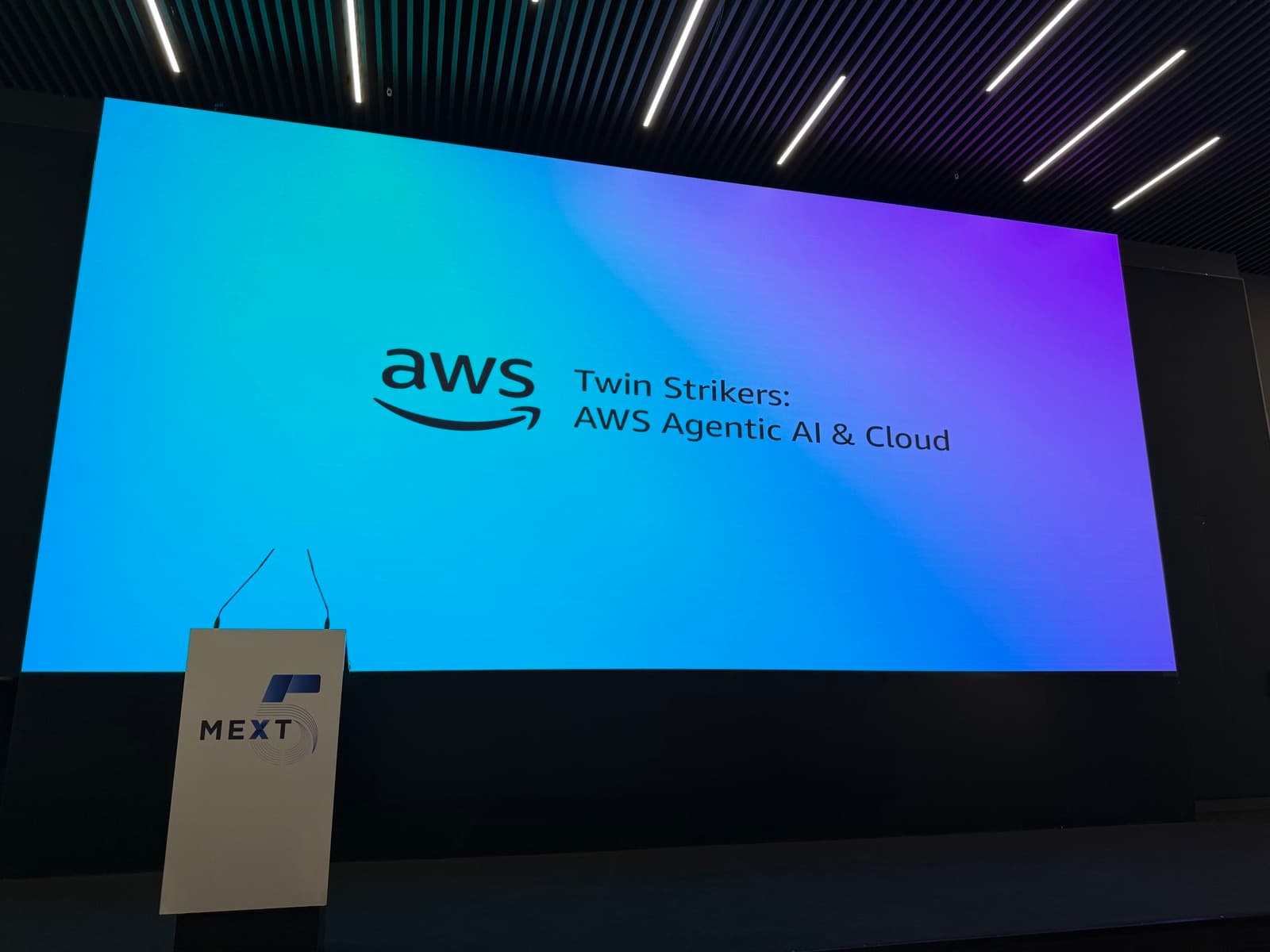
Some events aren't a product launch but the announcement of a threshold. The Twin Strikers: AWS Agentic AI & Cloud day at MEXT on 25 June was exactly that: its name a football pun about the 'perfect assist', yet the stage talked, end to end, about the real production life of agents. I was there with colleagues from work; I've left our notes here, alongside the diagrams I drew.
- Date
- 25.06.2026
- Venue
- MEXT · Istanbul
- Theme
- Agentic AI & Cloud
- Host
- AWS × MEXT
Topics of the day
- agentic AI
- MCP
- Amazon Bedrock
- AgentCore
- chat-native UI
- Kiro IDE
- Claude Code
- Agentic Football Cup
How the main stage ran
- 10:00Opening: Türkiye's AI journeyProf. Dr. Altan Çakır · İTÜ · Co-Chair, Turkish AI Platform
- 10:15Keynote: the agentic AI visionSam Dabboussi & Kıvanç Uslu · AWS · AWS Türkiye
- 11:15Transformation stories from the fieldBeko · Insider · Getir · Turkish Tech · Panel
- 13:45Agentic in productionEtiya · ForInvest · Teknosa · Panel
- ParallelBedrock, AgentCore, Kiro IDE, Claude Code, Agentic Football Cup5 rooms · Workshops & certs
The stage's shared sentence
Through the day, different speakers looked at the same picture from different corners: one at national-scale strategy, one at the market's 'year zero', one at the shape of the organization, one at moving airline booking from forms to conversation. Under all of them was a single sentence: an agent is no longer a demo, it's a system you have to keep standing in production.
Below I retold the ideas the way I enjoy most, by drawing them. Each diagram card carries the essence of one session; in between I've placed the photos from those moments.
Türkiye's AI journey
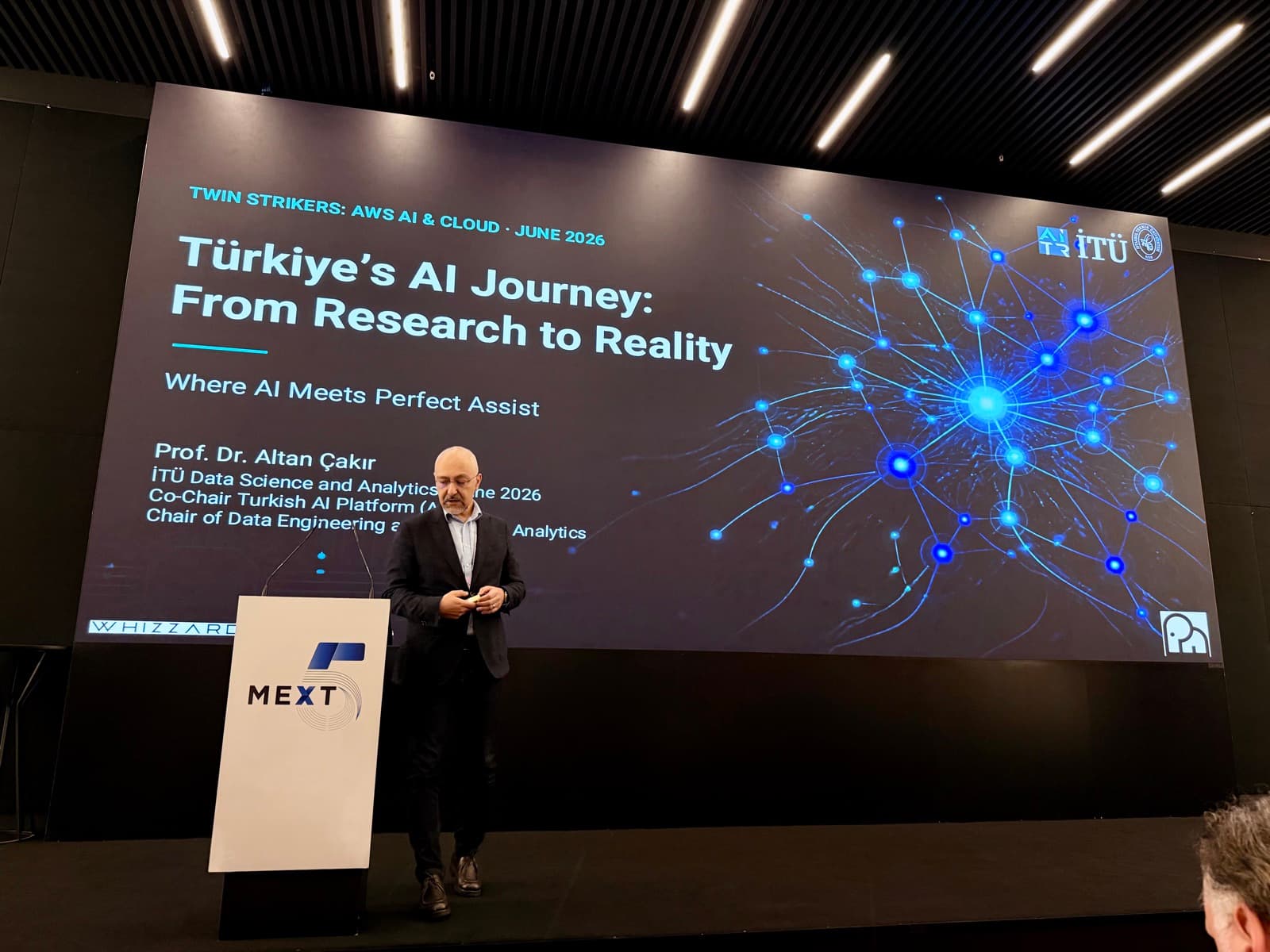
Prof. Dr. Altan Çakır (İTÜ) opened the day. His title was clear: from research to reality. He laid the 2021–2025 national AI strategy out like a report card: setting six strategic priorities and looking honestly at where each was hit and where it fell short.
The picture was both hopeful and sobering: the vision was ambitious, but there were visible gaps in execution. Çakır's framing wasn't blame, it was learning; the new strategy needs to learn from exactly these two sides.
- AI education & jobs
- Research support
- Data & infra
- Trust & ethics
- Sectoral transformation
- Intl. positioning
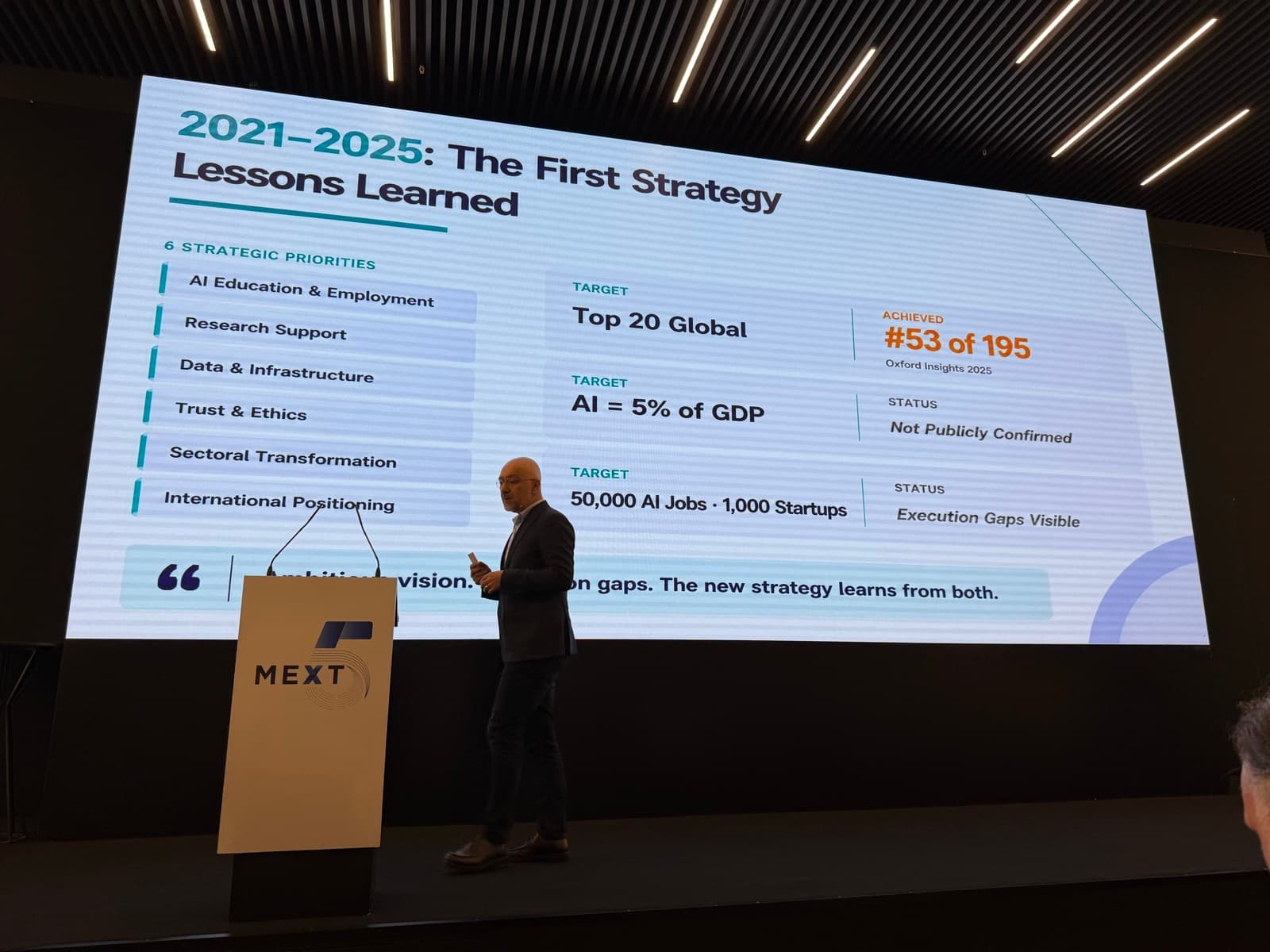
“Ambitious vision, visible execution gaps. The new strategy learns from both.”
2026: year zero for agents
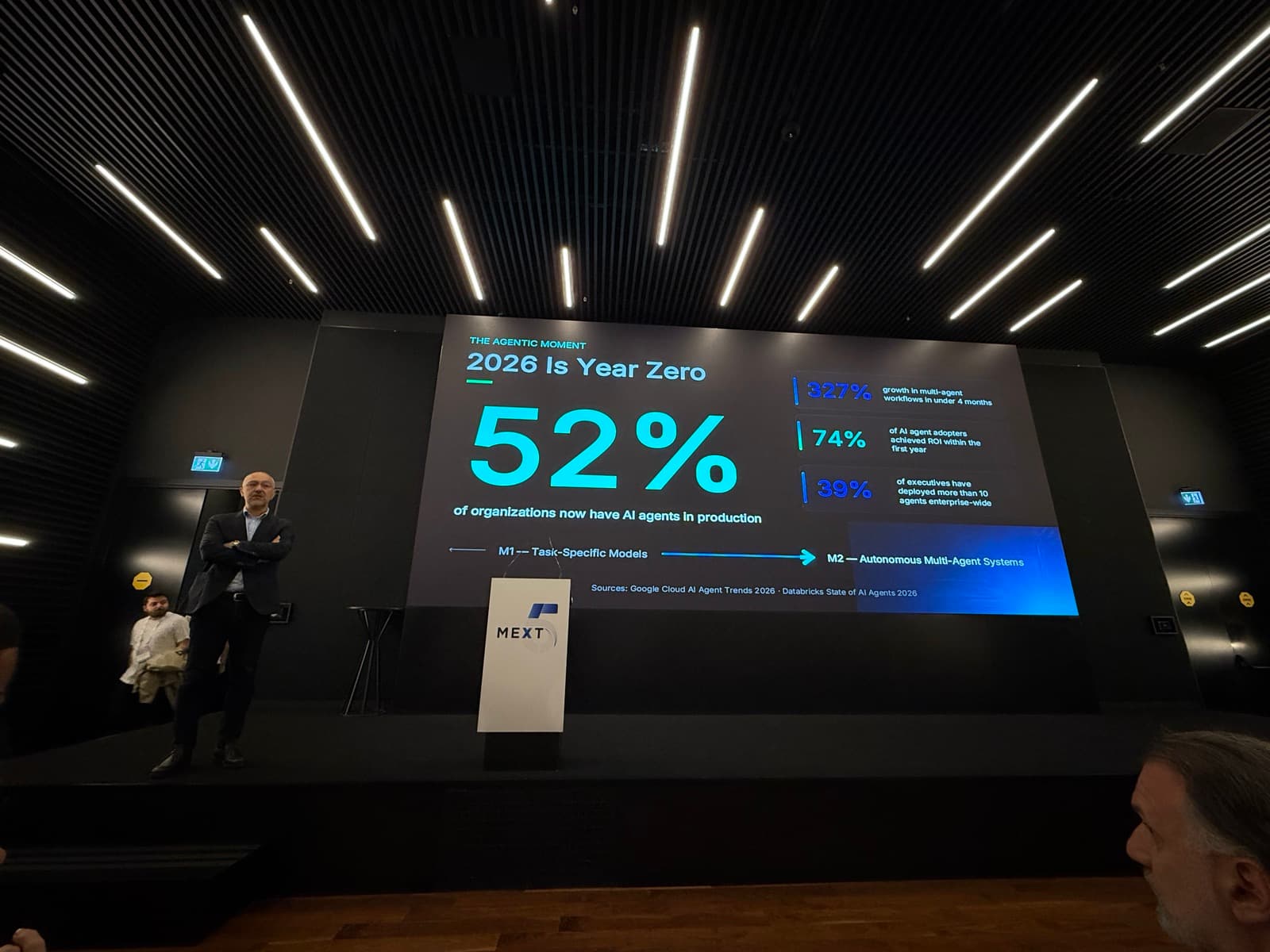
The keynote was given jointly by Sam Dabboussi (AWS) and Kıvanç Uslu (AWS Türkiye). Their thesis fit on one line: 2026 is 'year zero' for agents. Agentic AI is no longer the curiosity of early adopters but a reality most organizations already run in production.
of organizations run agents in production
reached ROI within the first year
growth in multi-agent workflows in 4 months
deployed 10+ agents enterprise-wide
The numbers on stage summed it up. The real shift, though, was told with arrows: from single, task-specific models (M1) to autonomous, multi-agent systems (M2). The cited sources were Google Cloud AI Agent Trends 2026 and Databricks State of AI Agents 2026.
Four shapes: from today to target
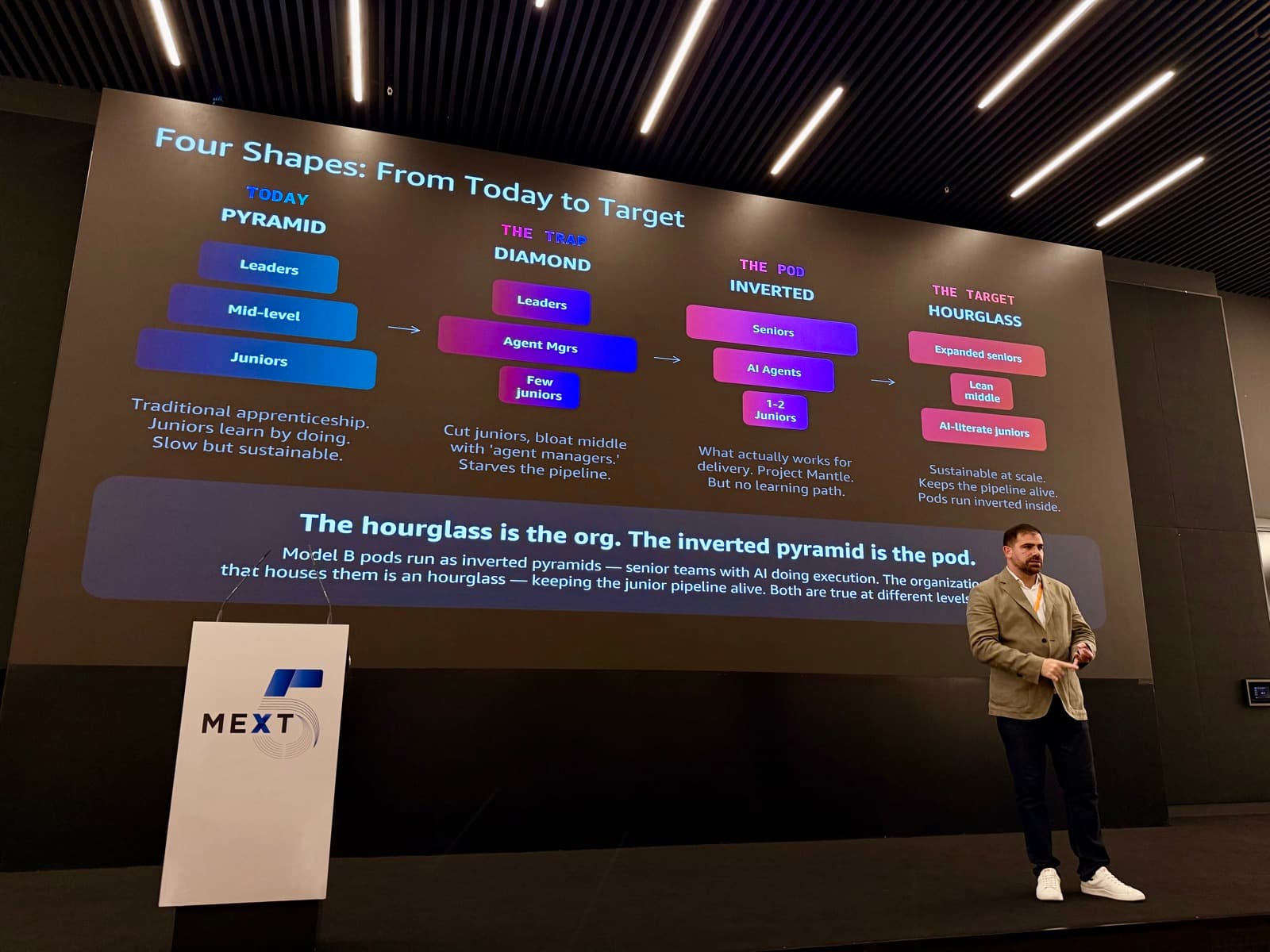
The keynote's most memorable visual was the shape of the organization. As agents join the team the classic pyramid breaks; the question is which shape is sustainable. The speakers told it in four stages.
Classic apprenticeship. Juniors learn by doing. Slow but sustainable.
Cut juniors, bloat the middle with 'agent managers'. Starves the pipeline.
What actually works for delivery. But there's no learning path.
Sustainable at scale. Pods run inverted inside.
The summary line: the enclosing organization is an hourglass, while the delivery team inside it (the pod) is an inverted pyramid. The inverted pyramid speeds delivery but, alone, starves the junior pipeline; the hourglass keeps that pipeline alive. Both are true at once, at different layers.
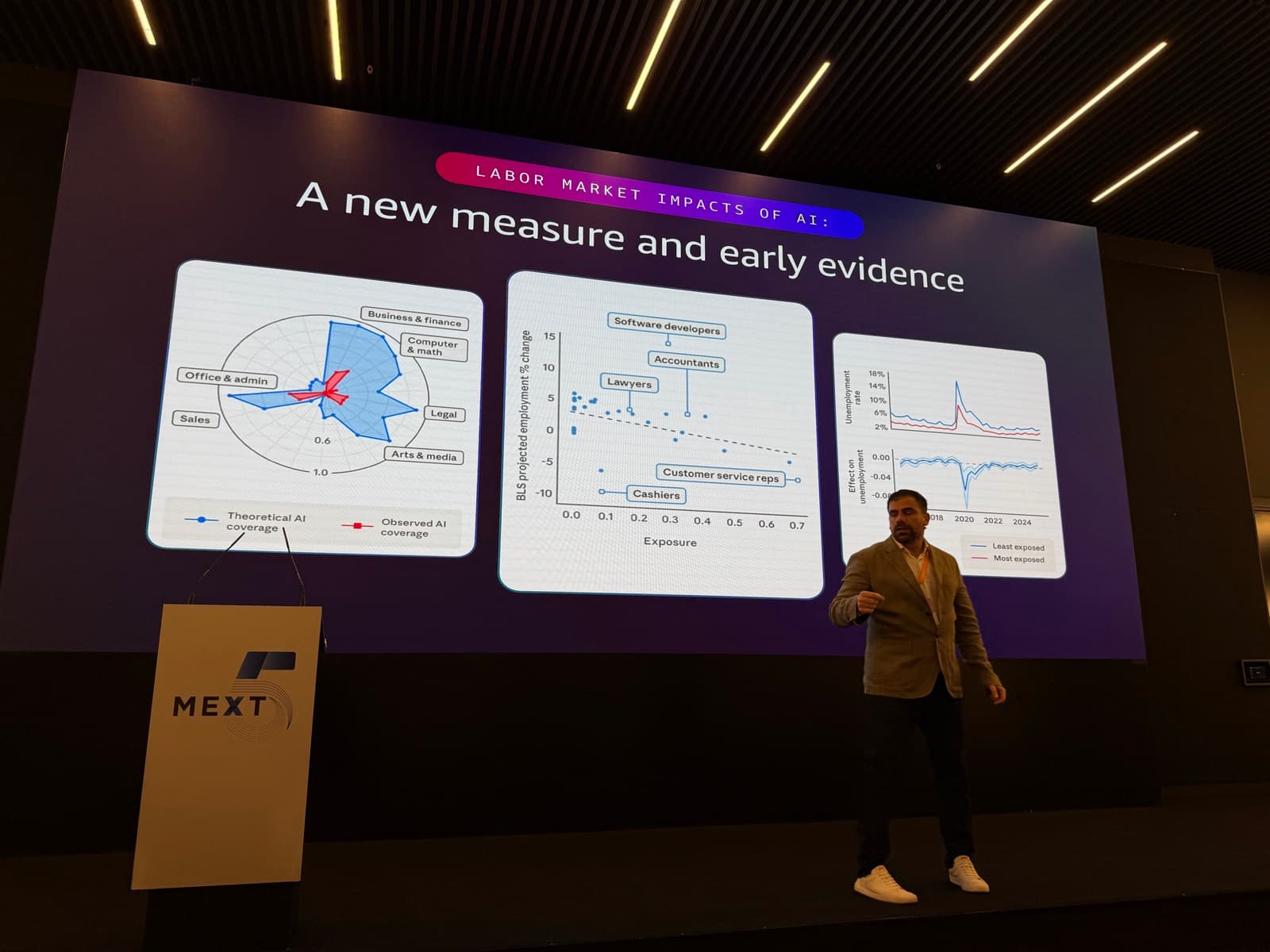
The same session touched the labor side too: theoretical AI exposure of occupations and observed usage don't match; in high-exposure jobs like software developers, accountants and lawyers the effect is already measurable.
From forms to conversations
The afternoon session closest to home for me was Ekrem Kenter's: Digital Lab Lead at Turkish Airlines Technology; the same roof I work under. His title was 'Building Chat Native UI with MCP Apps on AWS', and it described a very clear shift: from search boxes to conversation.
The old model was familiar: open the site, pick origin and destination, find dates on a calendar, sift dozens of filters, compare, decide, book. The new model is a single sentence: “I need a flight to Konya on Saturday after 9.” The agent handles the rest. By the data Kenter shared, AI-referred e-commerce traffic grew 7× between January 2025 and early 2026.
BEFORE · form
AFTER · chat
just the relevant fragment, in context, interactive
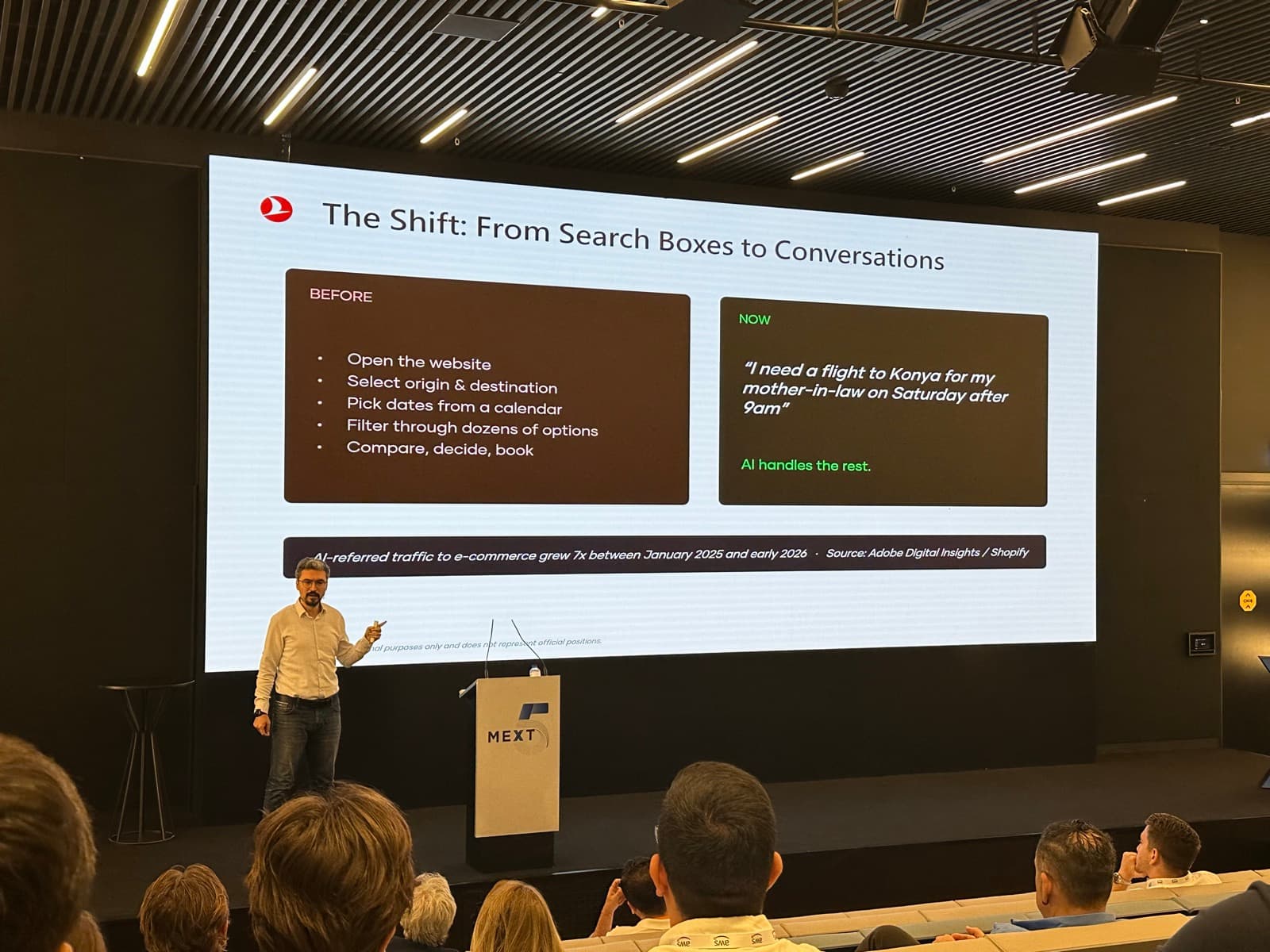
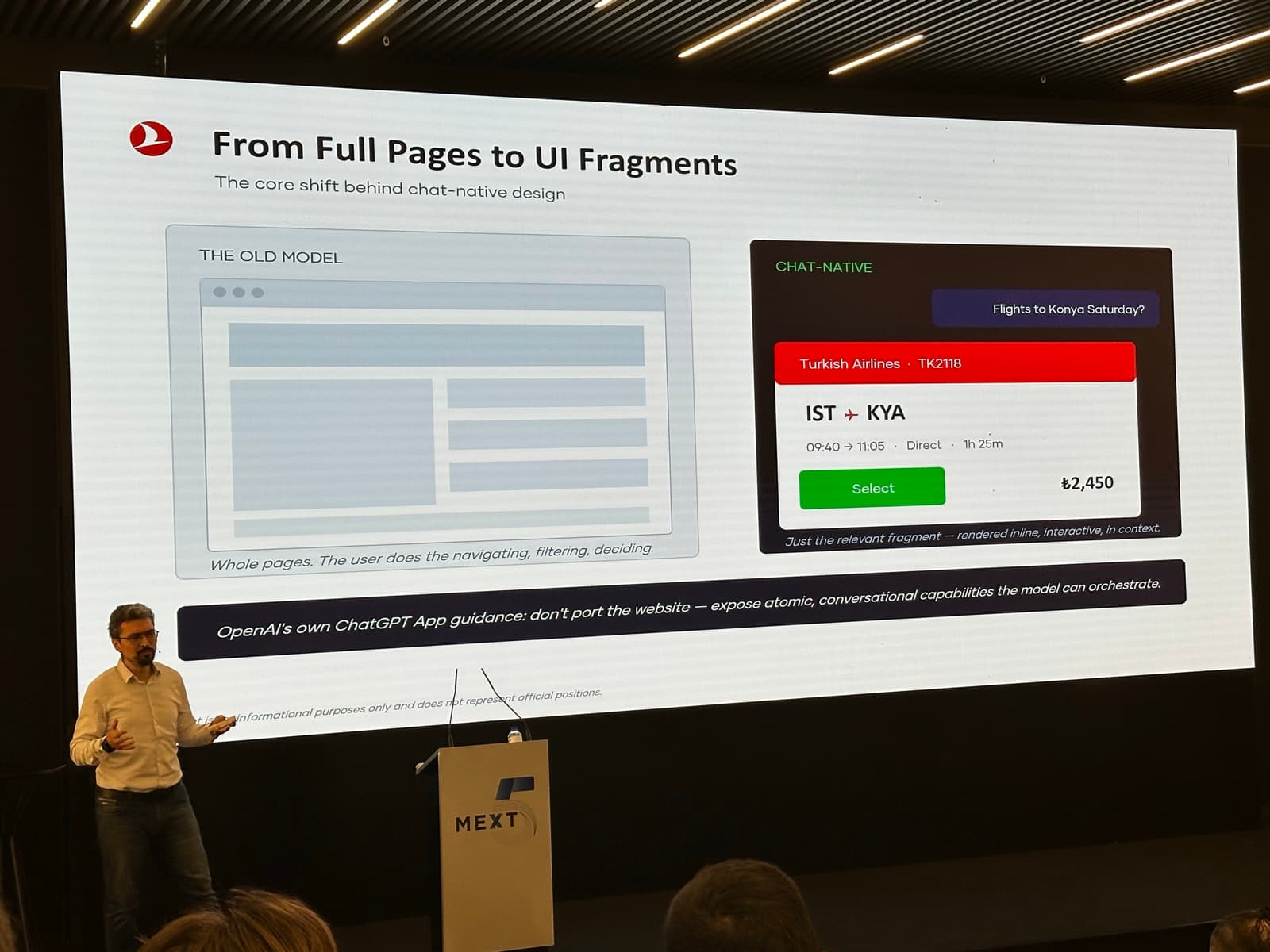
The critical design decision: don't port the website into the chat as-is. Instead of whole pages, expose atomic capabilities the model can orchestrate, then show the user only the relevant UI fragment, inline, in context, interactive. On the THY side this means one MCP backend feeding both the ChatGPT App and the Claude connector; Turkish Airlines is the first airline in Anthropic's Claude connector directory.
MCP: build once, run everywhere
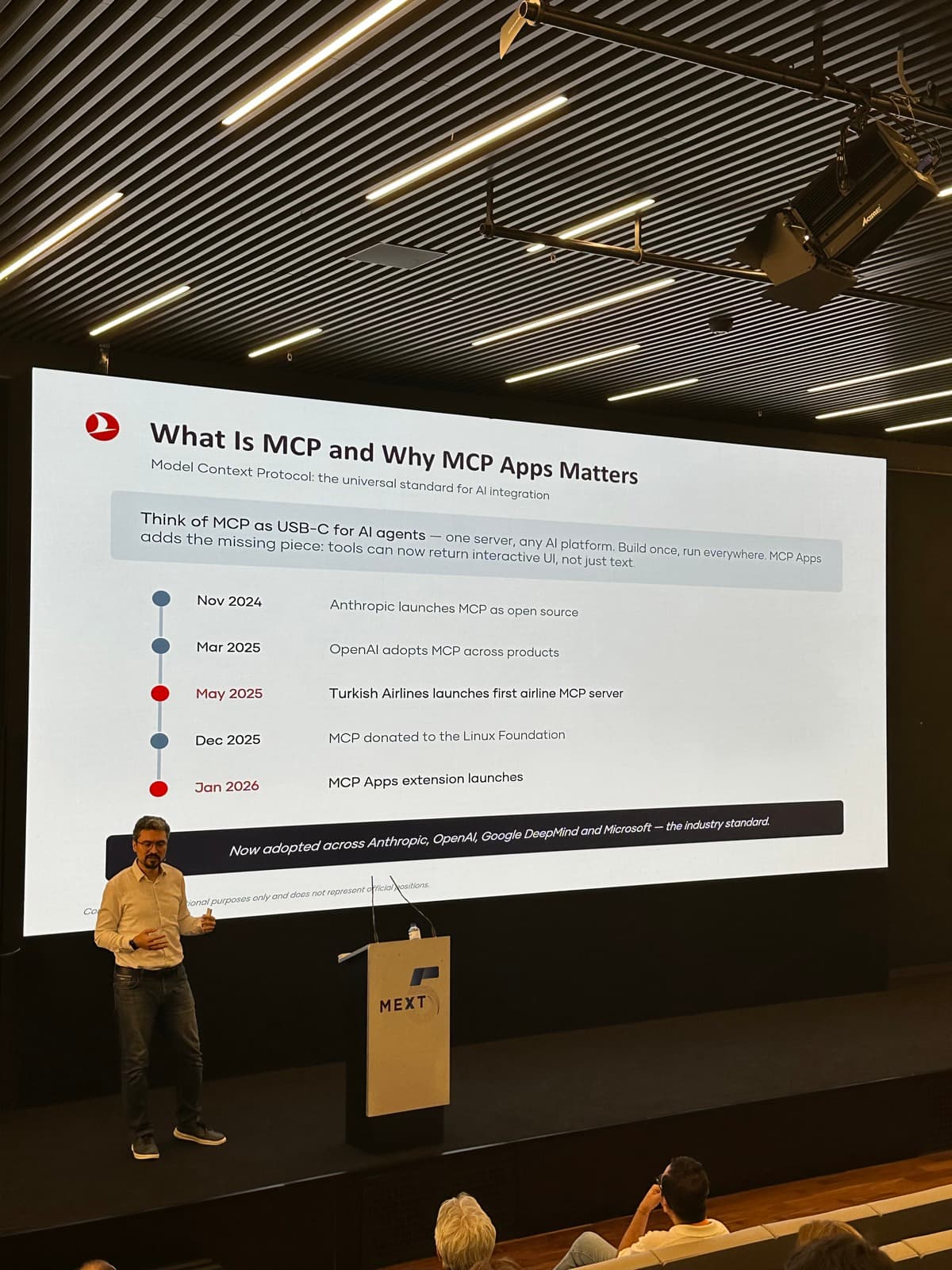
The standard underneath this shift was MCP (Model Context Protocol). Kenter's analogy stuck: MCP is like USB-C for AI agents. Write one server, and every platform plugs into the same port. Distribution stops being about 'which channel' and starts being about which capabilities you expose.
For THY the practical meaning is this: one tool spec, one backend; the ChatGPT App, Claude and future agents all look at the same capabilities. The timeline on stage showed how fast the protocol standardized, and it had a THY milestone in it.
- Nov 2024Anthropic open-sources MCP
- Mar 2025OpenAI adopts MCP across products
- May 2025THY launches first airline MCP server
- Dec 2025MCP donated to the Linux Foundation
- Jan 2026MCP Apps extension launches
Now the standard across Anthropic, OpenAI, Google DeepMind and Microsoft.
Hands on keys: Bedrock & AgentCore
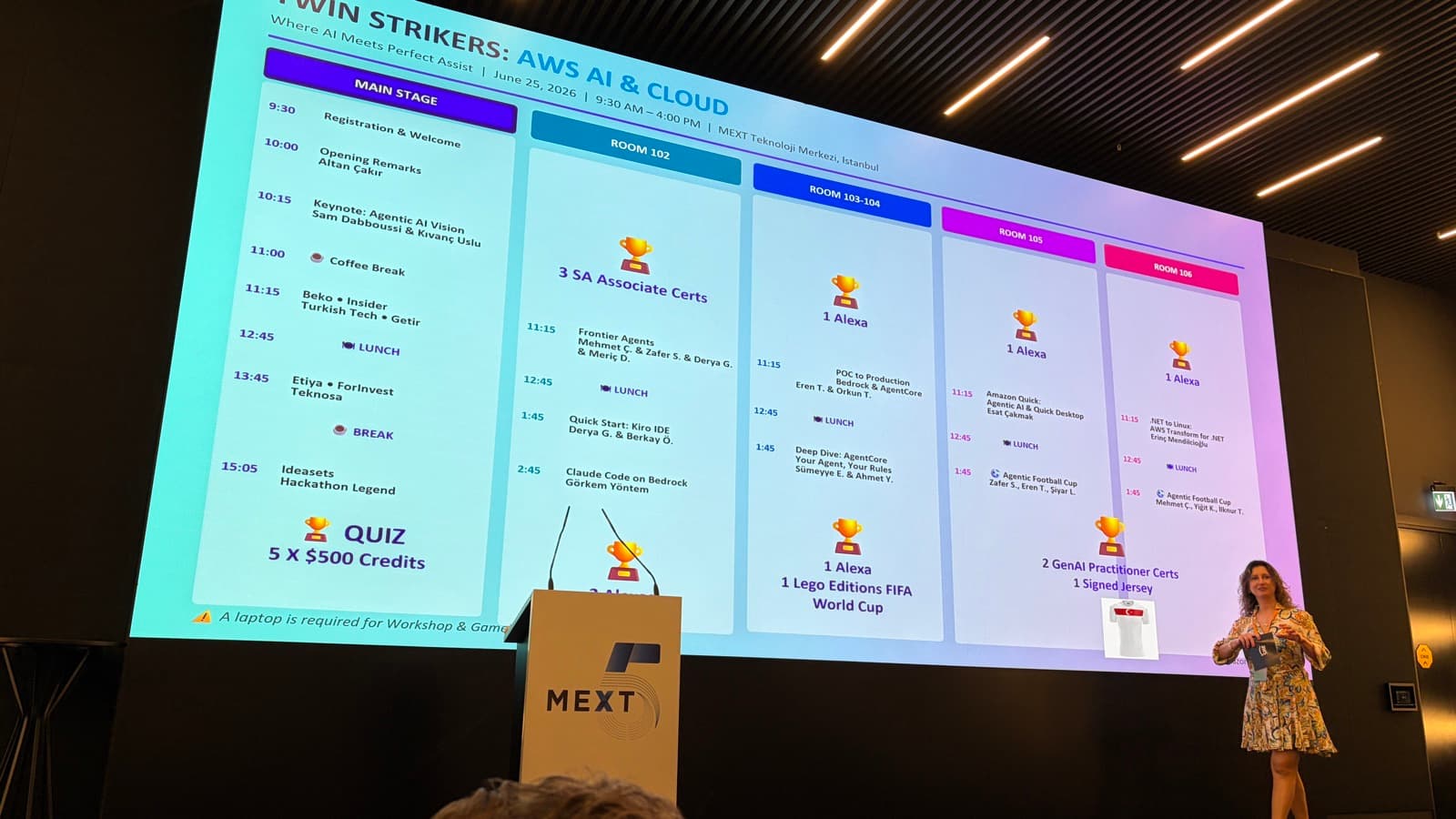
Alongside the main stage, five rooms ran in parallel. Here the talking stops and the keyboard starts: POC to production with Bedrock & AgentCore, 'your agent, your rules' with AgentCore, a quick start with Kiro IDE, Claude Code on Bedrock, .NET to Linux with AWS Transform, and certification sessions. Even the prizes were on the agenda: Alexa devices, a signed jersey, a Lego FIFA World Cup, and a quiz with 5 × $500 credits.
At the center of all these sessions was a single pattern: the agent loop. An agent isn't a model that answers a prompt in one shot; it perceives, plans, acts by calling tools, observes the result and loops back. AgentCore's 'your rules' promise lives exactly here: putting policy and limits on every step of that loop.
tool call, observation, repeat; until it's done
Agentic Football Cup
The interactive part of the day was the Agentic Football Cup: attendees built their own AI agent 'teams' and competed against each other. Here the name's football theme took the field: strategy, the playmaker and the finisher, all handed over to agents.
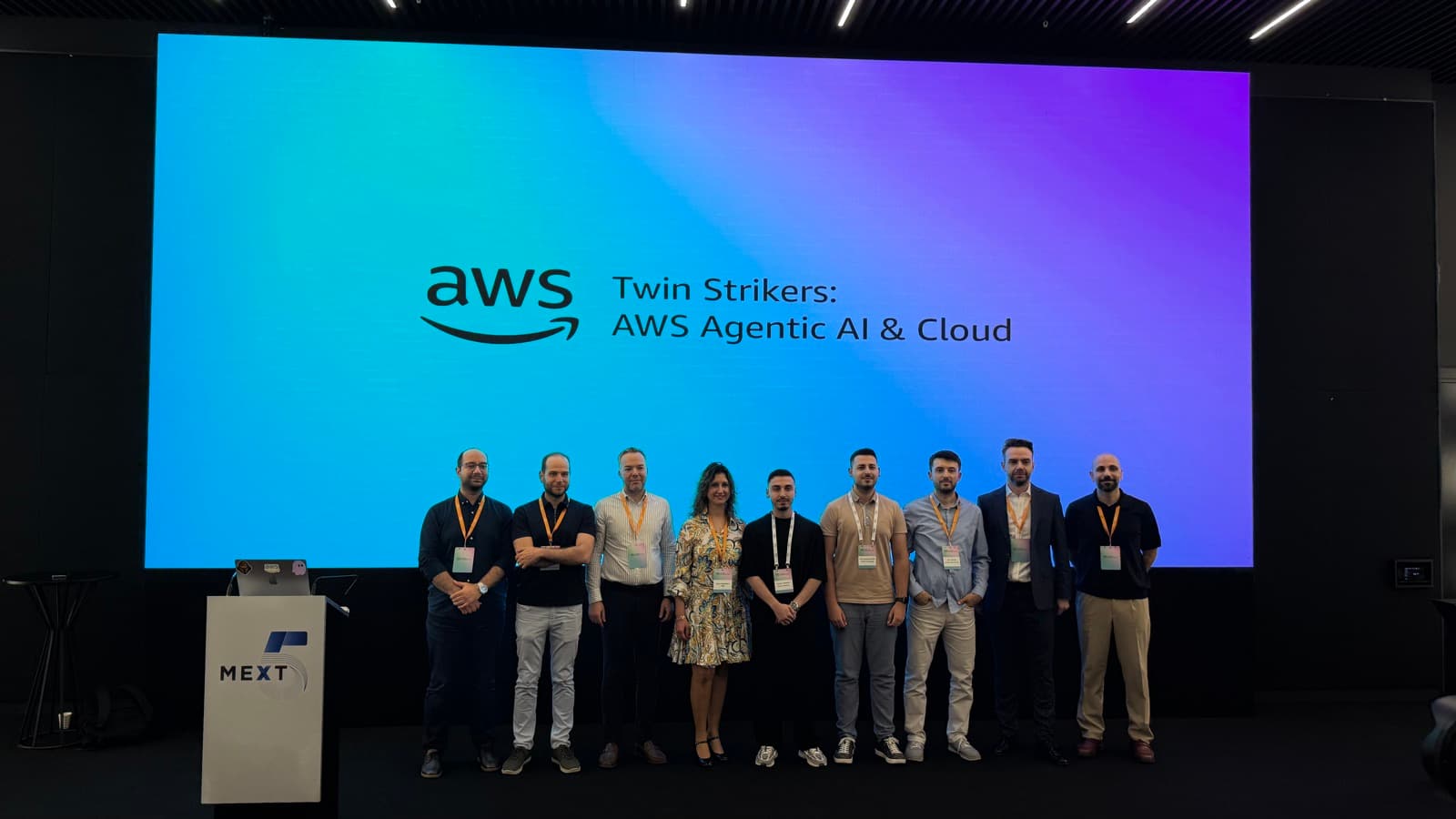
And the proud part: my colleague from work, Eren Demirkan Demir (Agentic AI Engineer at Turkish Airlines Technology, 7× AWS Certified), came second in the tournament. Congratulations again from here; the second step of the podium is no small thing. 🥈
The team, and what's left
A good technical day is measured as much by who you learn with as by what you learn. This one was generous with both: what AWS showed, Prof. Dr. Altan Çakır's honest report card, Ekrem Kenter's example from our own roof, and Sam Dabboussi's 'year zero' framing, all stacked up on the same stage.
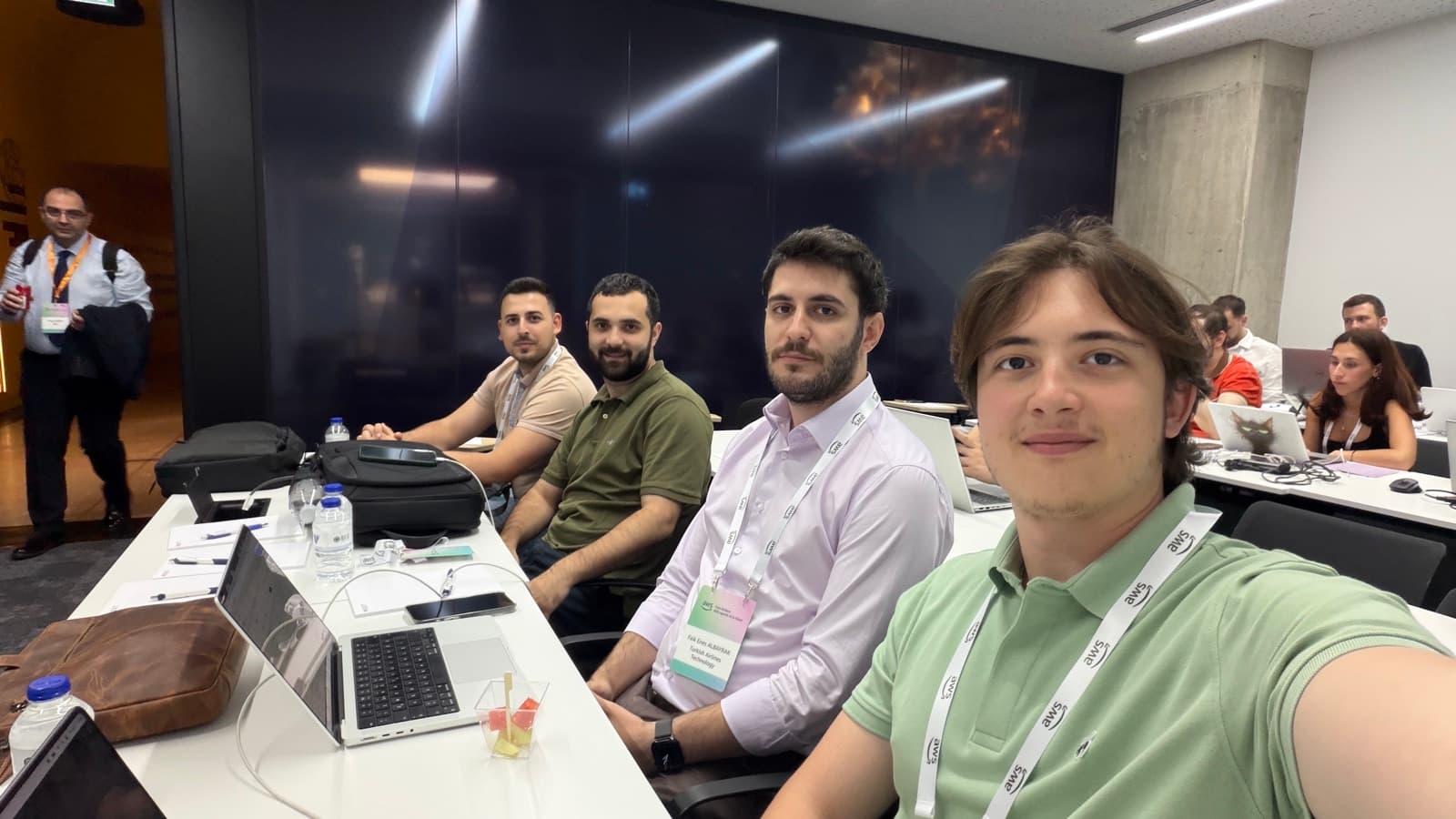
What's left is a few slides, a handful of photos, a full notebook, and a colleague on the second step. If it really is 'year zero' for the agent era, we're not starting from a bad place.